The Salesforce Job Market in 2026: What I Tell Hiring Managers
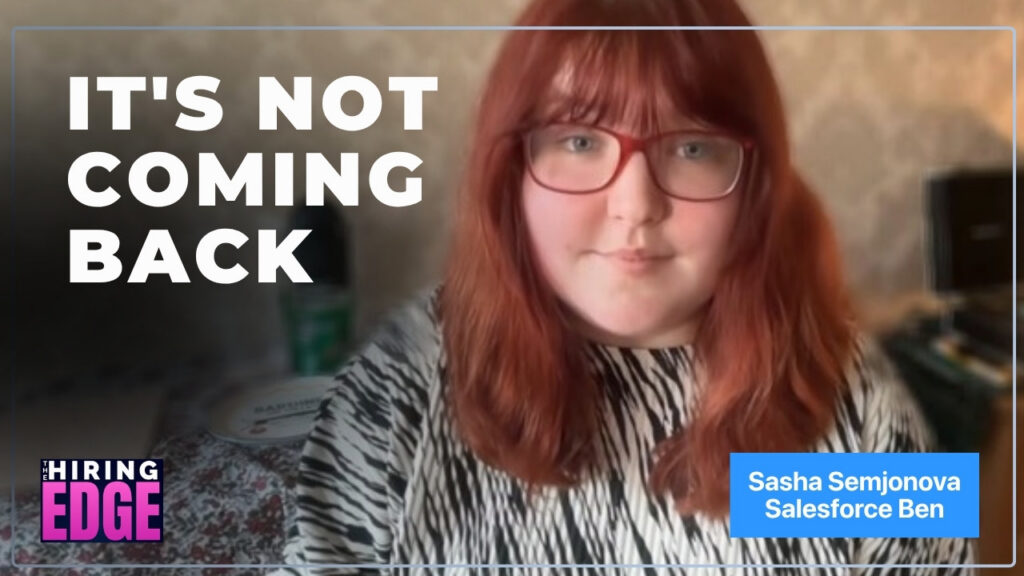
Scott Stafford and I had Sasha Semjonova on the show to talk about the Salesforce job market. Sasha is a tech journalist at Salesforce Ben and has been covering the ecosystem for almost four years. I’ve been recruiting for 26 years, the last eight running Salesforce Staffing, a Salesforce recruiting firm. Most of what gets written about this market is for candidates. I wanted this one to be useful to the people doing the hiring too.
Hiring is up a little, and the old entry path is gone
Sasha has seen Salesforce hiring tick up slightly over the past several months. It’s a small increase, and I don’t expect hiring to get back to the post-COVID peak for a long time.
The path most people used to get in doesn’t work anymore. You used to be able to get one certification, land a job at $60,000 to $65,000, and be at six figures in two or three years. Those roles are mostly gone.
Sasha calls what employers want now “specialized specialists.” These are people who know the platform and can also do business analysis, think like an architect, and use AI in their actual work. Employers have the leverage right now, and they know it.
One job description, four jobs
This comes up all the time. A company posts one role and asks for an architect, a developer, an admin and a business analyst, for one salary. Then they can’t figure out why nobody qualified applies.
Someone told me once, that’s a team.
My advice to hiring managers is to figure out the core work first. Bring in a couple of strong contractors for about three months to build it and set it up right. Contractors that good usually won’t take your full-time job and you probably couldn’t afford them if they would, so use them for the build. After that, hire the steady person who keeps it running, and have an architect check in once a month or once a quarter.
You get the system built and maintained, and the job description you post at the end describes a person you can actually find.
Scott has 27 Salesforce certifications, and he said most job postings ask for far more than the company needs. They write down everything they’d want in a perfect world. Candidates who show they can learn the job and who reach out to a real person often get hired over that list.
A lot of your applicants are bots
Sasha told us that many responses to job ads now come from bots or AI in some form. Hiring managers need to hear that.
Her advice to candidates was good. If you show up as a real person, you’re ahead of a big share of the people who applied. Don’t talk yourself out of a job you could do. Read the posting honestly, and if you could be the person they need, apply.
If you’re hiring, your applicant pile is going to be full of AI-generated resumes. The person who reaches out to you directly and can talk about the work in detail deserves a closer look.
I’ll add what I see from my side. People pay a few hundred dollars to have an AI-written resume sent to hundreds of jobs a day for months. It gets them some interviews. Then they talk to someone, and in a few minutes it’s obvious they don’t fit the role. A person still makes the hiring decision. Learn the skills that keep you relevant, and be ready to explain in your own words why you’re qualified.
What candidates are dealing with
I asked Sasha if this is the hardest job market she’s seen. She said candidates are dealing with more at once than she’s seen before: ghost jobs, layoffs, a crowded tech market, and companies putting money into an AI agent instead of the person they planned to hire.
She said that last one is still uncommon. She expects to see more of it as companies get stricter about budgets.
If you’re hiring, keep in mind that the good candidates have been through all of that before they get to your interview. A clear, accurate job posting gets their attention.
Should new admins still get into Salesforce?
We spent more time on this than anything else. A listener in their mid-twenties, halfway through an admin certification, asked if it’s still worth it. We each answered it differently.
Sasha told them to keep their energy up, stay realistic, and use their network. Community groups and Dreamin’ events are where people meet hiring managers.
My answer was tougher. Entry-level hiring is harder than it was a year ago. Another certification probably won’t change that. Learning to work with AI tools and agents will.
Scott pushed community too. User groups and regional events build the relationships that lead to job offers.
Where the platform is going
Sasha closed with what she expects next. She thinks Salesforce will get more headless, more of the work will happen in Slack, Agentforce will keep getting pushed, and the user interface will change faster than people are used to. Her advice for ISVs and partners was to find out what customers want from AI before building flashy features. In a lot of cases they want something smaller that ties their org together and saves time.
If you’re hiring Salesforce talent
- If one job description needs four skill sets, build it as a team. Use contractors for the build, then hire the person who runs it.
- Assume many applicants used AI to apply. Pay attention to the people who contact you directly and can talk about the work.
- Write a posting that matches the real job.
About the guest
Sasha Semjonova is a tech journalist at Salesforce Ben. Salesforce Ben runs an annual Salesforce salary survey that tracks pay and job satisfaction across the community.
About The Hiring Edge
I host The Hiring Edge with my co-host, Scott Stafford. I own Salesforce Staffing, a Salesforce recruiting firm. On the show we talk about hiring, interviewing and the Salesforce job market, for hiring managers and Salesforce professionals.
- Salesforce Staffing: https://thesalesforcerecruiter.com
- Salesforce Ben: https://www.salesforceben.com
- Watch on YouTube: https://youtu.be/tImuWq0MG7M
- Listen: https://thehiringedge.buzzsprout.com/2134593/episodes/19321398-the-salesforce-job-market-reset-2026