The 2026 Salesforce Hiring Play: Why “Gut Feel” Is Out and “Data Literacy” Is In
If you’re hiring Salesforce talent right now, you’re navigating the strangest market in a decade. Demand is up in some pockets. Exits are accelerating in others. And the candidates who look great on paper are increasingly hard to separate from the ones who will actually move your business forward.
I covered this in depth on The Hiring Edge podcast episode with Scott Stafford and the JoshForce YouTube channel. If you want the full breakdown, go watch the episode — “Why Your Salesforce Hiring is Failing | AI Literacy & The Mirror-tocracy Trap.” This article captures the most important pieces for anyone responsible for a hiring decision in 2026.
Here’s what’s changed, what it costs you if you ignore it, and exactly how to fix it.
The Salesforce Hiring Market in 2026: What Are You Actually Buying?
The ecosystem in 2026 is a paradox. Headcount is tightening. Output expectations are skyrocketing. The companies that are winning are hiring fewer people — but paying significantly more for the right ones.
You aren’t just hiring an admin or a developer anymore. You’re hiring a decision-maker who can operate at the intersection of AI, data, and business process. The old archetype — someone who can configure objects and close Jira tickets — is being replaced by something different.
That person is the Orchestrator.
An Orchestrator doesn’t just build. They design systems, leverage AI tools to multiply their own output, and connect the dots between technology and business outcomes. They understand data infrastructure. They can prompt their way through a complex task. And they think about leverage, not just execution. Learn more about the Orchestrator premium and what it means for your team.
If your job description is still written for a Builder, you’re fishing in the wrong pond.
Why Should You Pay 10–20% More for Top Performers?
Let’s talk about budget, because this is where most hiring managers get stuck.
The case for paying top dollar isn’t altruistic — it’s arithmetic. A $195k Salesforce Architect who understands AI orchestration and Data Cloud governance will out-deliver a $165k architect who is “keeping the lights on.” Not by a little. By 50% or more in real output.
Stop pitching your CFO on headcount. Start pitching on outcomes.
One Orchestrator with strong AI fluency will out-produce three legacy admins who are still treating Salesforce like a point-and-click tool. When headcount is finite and expectations are not, paying 10–20% more for an A player is not a budget problem. It’s a risk mitigation strategy.
The flip side is also true: hiring cheap and hiring wrong is one of the most expensive mistakes a Salesforce leader can make. Poor hire in a mid-level role? You’re looking at $75k–$150k in total cost of failure when you factor in recruiting fees, onboarding time, productivity loss, and the team morale hit.
Pay for the right person once. Or pay for the wrong person twice.
How Do You Actually Test for Data Literacy and AI Skills?
This is where most hiring processes fall apart. Leaders have gotten comfortable asking vague questions about AI experience and accepting vague answers.
“I use ChatGPT every day” is not an answer. It’s a deflection.
You need to test for two specific competencies — and I mean actually test, not ask about.
Are They Truly Data Literate?
Data literacy is the foundation. AI is only as good as the data it’s working with, and a candidate who doesn’t understand that is going to build on sand.
Ask this: “How do you determine data relevance when you’re migrating 10-year-old records into a new system?”
Listen for whether they mention data governance frameworks, Data Cloud, deduplication logic, or schema integrity. If their answer is “I’d export it and clean it up in Excel,” you’ve learned something important.
Strong candidates will talk about upstream ownership, data stewardship roles, and what happens to AI output when your input data is garbage. That conversation reveals more than any certification.
Can They Prompt Their Way Through a Real Problem?
Don’t ask if they use prompt engineering. Give them a live prompt challenge.
Pick a real task — something relevant to the role. Ask them to vocalize a prompt they’d use to solve it. Watch whether they use a structured approach like CRAFT prompting:
- Context — What situation are you setting up?
- Role — What role is the AI playing?
- Action — What specific action do you want?
- Format — How should the output be structured?
- Tone — What register and style is appropriate?
Candidates who wing it will produce a vague, single-sentence prompt. Candidates who know what they’re doing will work through the layers. The difference is obvious in real time.
What Is the “Puppy Prompt” Test and Why Does It Work?
Scott Stafford brought this one up on the podcast, and it stuck with me.
The Puppy Prompt is a quick, low-stakes AI assessment you run during the interview. You give the candidate a warm, simple scenario — something like writing a short welcome message for a new puppy adoption center’s CRM automation — and watch how they engage with the prompt itself.
The content doesn’t matter. The behavior does.
Does the candidate ask clarifying questions before jumping in? Do they think about the audience, the tone, the format? Do they treat it like a mechanical text-generation task, or do they approach it like a communication problem that AI is helping them solve?
Top candidates treat the “Puppy Prompt” like a design problem. They pause, they ask, they structure. That’s the behavior you want at scale when the stakes are much higher than puppy adoption.
It’s fast. It’s low-friction. And it separates the people who understand AI as a thinking tool from the people who treat it like a search engine.
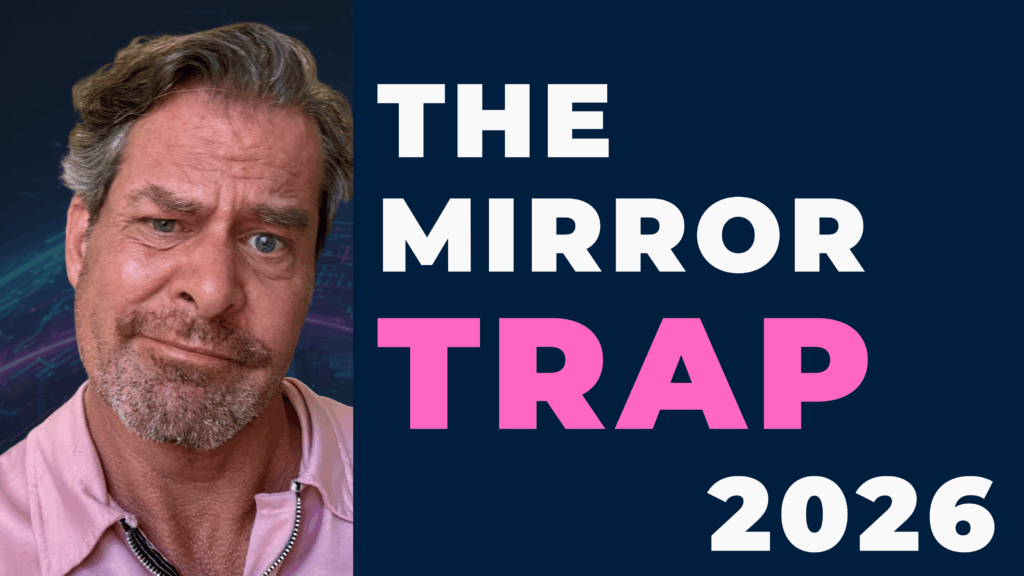
What Is the Mirror-tocracy, and Is It Running Your Hiring?
The “Mirror-tocracy” is a term coined by Carlos Bueno, and it describes something every hiring manager needs to look in the eye: we are naturally biased toward candidates who remind us of ourselves.
Same communication style. Same background. Same way of approaching problems. Same energy in a room.
It feels like cultural fit. It’s usually confirmation bias.
I’ve fallen into it. Most hiring managers have. You meet someone in the first ten minutes of an interview and you already know you like them — or you don’t. That instinct isn’t reliable. It’s pattern-matching against your own reflection.
Here’s the rule I use now:
- If you instantly like a candidate: Force yourself to find two specific reasons they might fail in this role. Be concrete. Not vague — specific.
- If you instantly dislike a candidate: Force yourself to find two specific reasons they might be exactly what your team needs. What are you potentially missing because of a first-impression reaction?
Write them down before you make a decision. That friction is what keeps you from building a team in your own image.
A team of people who all think the same way isn’t a team. It’s an echo chamber. And echo chambers do not catch the problems coming from blind spots.
The Tom Graber Story: What Almost Slipped Through My Fingers
I want to tell you about Tom Graber, because this one stays with me.
Tom came in for an interview and his body language in the first meeting was uncomfortable to be around. He was stiff, closed off, and hard to read. My gut said no. My gut was wrong.
I challenged him on it. I told him directly that I was getting a certain signal from him and asked him to tell me what was actually going on. He opened up. What I’d read as discomfort was actually nerves and a natural introversion he was actively working to manage.
Tom became one of the best hires I’ve ever made. He’s also become one of my closest friends.
If I’d followed my gut in that first ten minutes, I’d have passed on someone exceptional because I couldn’t separate his communication style from his capability.
The Tom Graber story is not a feel-good exception. It’s a repeatable risk. Brilliant people come packaged in all kinds of ways. Your job is to see past the packaging.
The 2026 Hiring Checklist: What to Do Before You Decide
Before you advance a candidate or pass on them, run through these:
- Did you test for data literacy with a specific, technical question — not a vague one?
- Did you run a live prompt challenge and evaluate their structure, not just their output?
- Did you check your own reaction — and force yourself to stress-test it in both directions?
- Did you look past communication style to assess actual capability?
- Is your job description written for an Orchestrator, or are you still hiring for a Builder?
If you can’t answer “yes” to all five, you’re leaving risk on the table.
What’s the Bottom Line for Hiring Leaders?
Hiring well is the fastest path from Director to VP. Hiring poorly is the fastest path the other direction.
The Salesforce market in 2026 rewards precision. You have fewer seats to fill and higher stakes on each one. The leaders who get this right will build teams that outperform regardless of headcount. The ones who rely on gut feel, vague interviews, and mirror-tocracy bias will keep wondering why their teams aren’t moving fast enough.
Pay more for Orchestrators. Test for real literacy. Check your bias. That’s the 2026 hiring play.
Also worth reading: the five risks quietly destroying your Salesforce team and stop building roles you can’t replace.
Ready to build a Salesforce team that actually performs? Visit TheSalesforceRecruiter.com and let’s talk about what you’re building — and who you need to build it.
Josh Matthews is the founder of Salesforce Staffing, LLC and TheSalesforceRecruiter.com and host of The Hiring Edge podcast. He has been recruiting since 1999, operating Salesforce-only since 2018, and has conducted more than 15,000 interviews.